
Sustainable packaging is no longer a marketing add-on.
In the U.S. market, Eco-Friendly Structural Packaging is now a baseline expectation—from retailers, logistics partners, and customers.
This guide explains in detail what actually works in real-world production:
Materials, printing templates, printing decisions, and workflow that minimize waste without compromising structure or brand value.
Pre-Design — Sustainability Starts Before Design
True sustainable packaging is built at the structural level—long before graphics, finishes, or branding enter the process.
Eco-friendly packaging decisions are locked in before Illustrator opens.
Material Selection
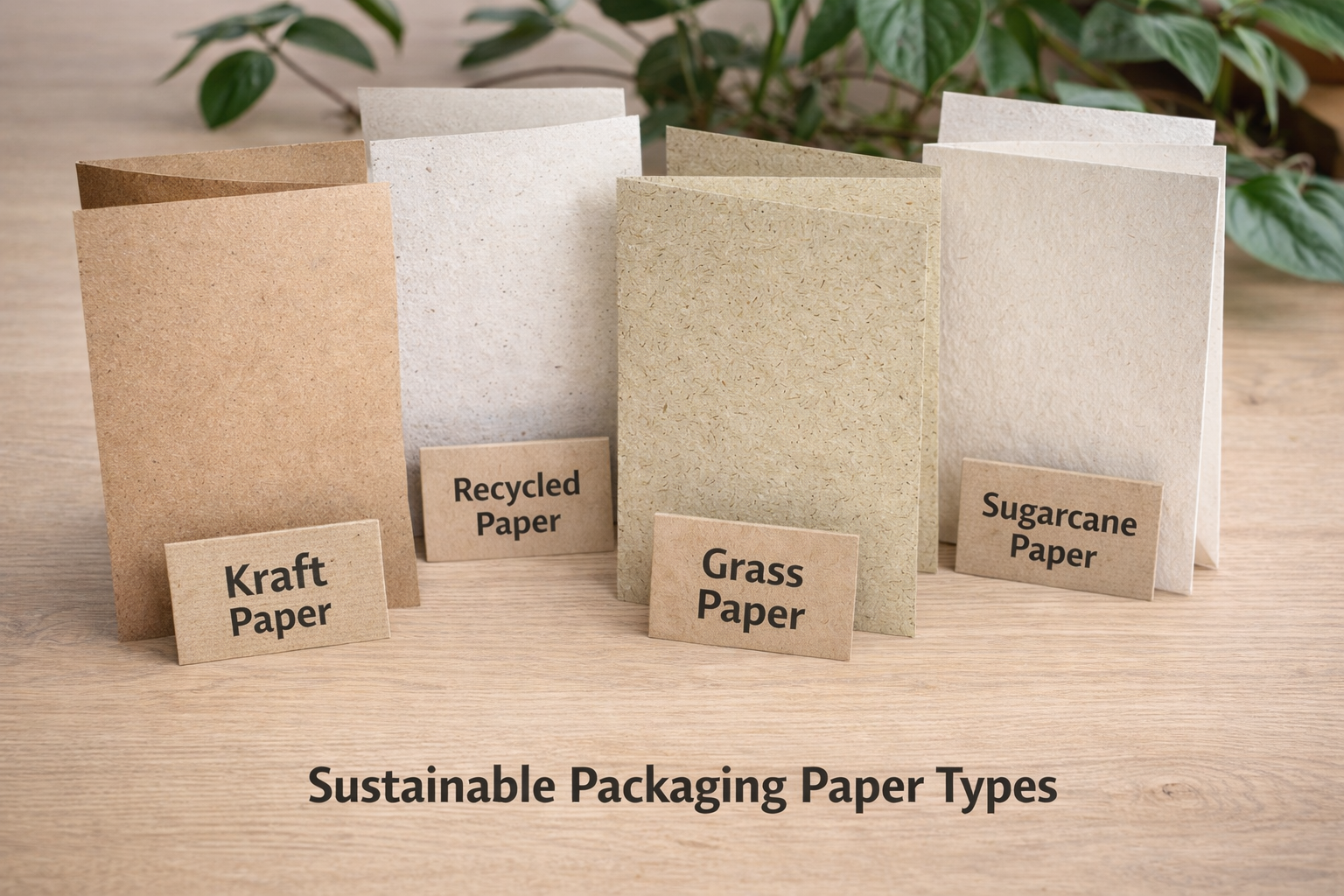
For a deeper comparison of paper types, weights, printing inks, and real-world packaging uses, see the Sustainable Packaging Paper guide.
- Use Forest Stewardship Council (FSC)-certified paper
- Prefer virgin fiber only when necessary
- Consider alternative fibers (bamboo, bagasse) only if locally available—shipping kills sustainability fast
Sustainable packaging starts with verified fiber sources and minimal material complexity
Weight & Grammage (GSM)
Use only what the product needs.
| Product Weight | Recommended GSM |
|---|---|
| Lightweight (cosmetics, stationery) | 250–300 gsm |
| Medium (candles, apparel) | 300–350 gsm |
| Heavy (glass, electronics) | 350–400 gsm |
Over-specifying GSM = hidden waste.
Smart Sizing
Reducing box dimensions by 2–3 mm can:
- Improve pallet density
- Reduce shipping emissions
- Lower material cost per unit
This is measurable sustainability—not branding fluff.
How to Choose Candle Packaging for Homemade Candles (Complete 2026 Guide)
Structural Engineering — The Dieline Is the Product
If the structure fails, sustainability claims don’t matter.
Glue-Free Structures
- Mechanical locking > chemical adhesives
- Faster recycling
- Cleaner material stream
Interlocking Tabs
For heavier SKUs:
- Double-layer locking flaps
- Reinforced corner folds
- No plastic tape, no hot glue
Direct statement:
A well-engineered glue-free box can outperform a glued one.
Nesting & Sheet Optimization
- Tight dieline nesting = lower paper waste
- Always test press sheet layouts before approval
Graphic Design — Less Ink, More Intent
Eco-friendly design is about restraint, not trends.
Minimal Ink Coverage
- White space is functional
- Avoid full-bleed solids
- Less ink = faster drying = less energy
Color Management (Critical)
Reprints are the biggest sustainability killer.
Inspired by the Busho Designer print workflow:
- CMYK profiles matched to substrate
- Soft proofing before approval
- No guessing on press
Color accuracy is a sustainability practice.
Printing & Finishing — The Chemistry Matters
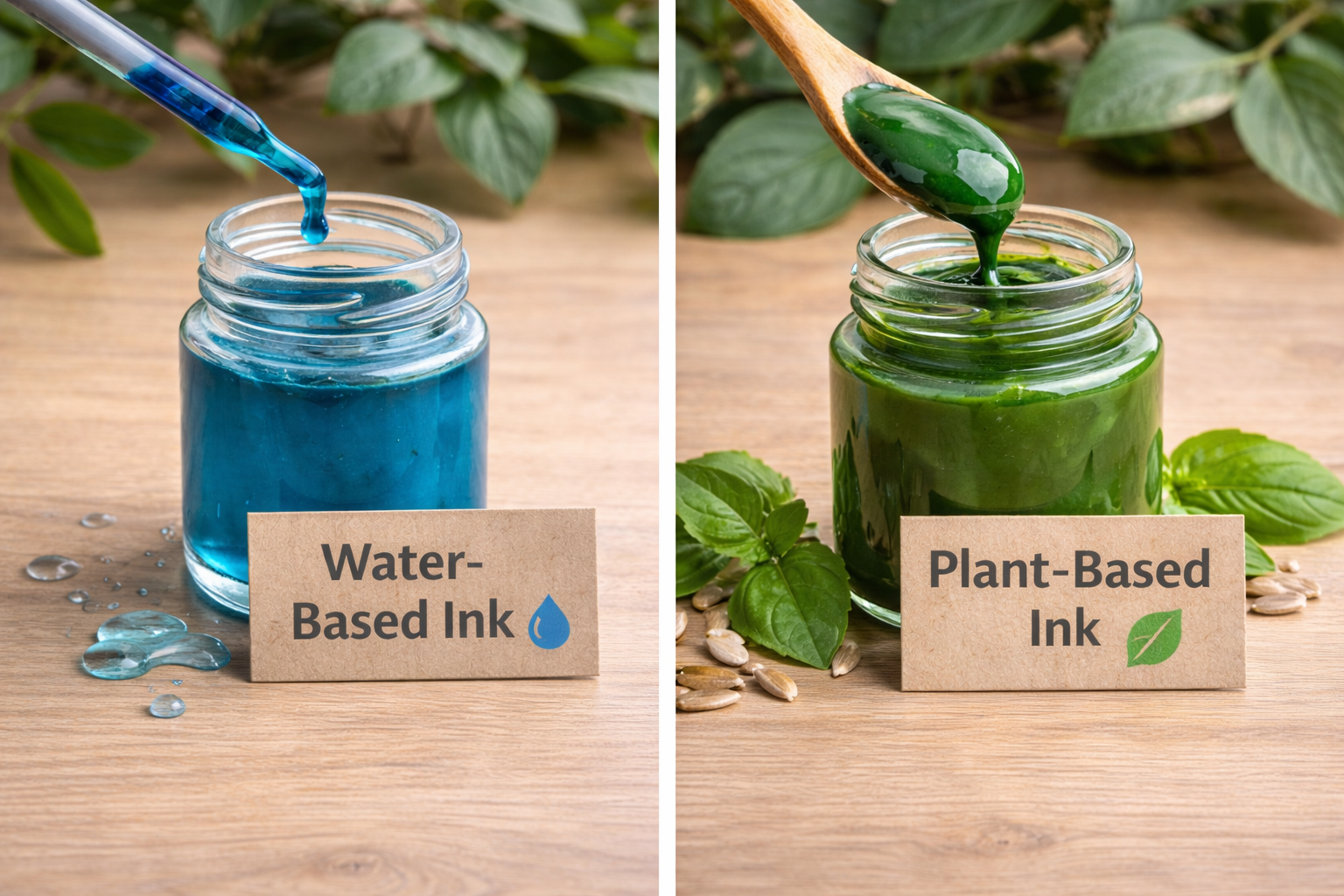
Not all “eco” labels survive recycling.
Inks
- Vegetable-based or water-based inks
- Compatible with paper recycling streams
- Proven performance when managed correctly
Referenced standards align with Pantone eco ink guidance.
Coatings
- Use aqueous coatings
- Avoid plastic lamination
- Maintain recyclability
Direct truth:
Foil, soft-touch lamination, and mixed materials break recyclability.
Real-World Experience — Bushra’s Print Reality
In my own packaging projects, I’ve seen this repeatedly:
- Brands overspend on paper weight instead of structure
- Reprints happen because color was approved on screen, not proofed
- “Eco” finishes get rejected by recyclers
What actually worked:
- FSC paper + optimized GSM
- Glue-free locking dielines
- Aqueous coating instead of lamination
Result:
Lower unit cost. Fewer reprints. Cleaner sustainability story.
This is not theory—it’s production math.
Tools & Standards I Actually Use
- Adobe Illustrator (dieline accuracy)
- Print supplier ICC profiles
- FSC paper documentation
- Guidelines from Sustainable Packaging Coalition
FAQ — Straight Answers
Q1: Can glue-free packaging handle heavy products?
Yes. Interlocking tabs + reinforced folds outperform glue in many cases.
Q2: Are vegetable inks less vibrant?
No—when color-managed correctly.
Q3: Is eco-friendly packaging more expensive?
Upfront sometimes. Long-term logistics and brand trust usually offset it.
Q4: Is FSC paper always better?
Only when sourced regionally. Distance matters.
Q5: What’s the biggest sustainability mistake?
Overdesigning structure and overusing finishes.
Eco-Friendly Structural Packaging succeeds when structure, material choice, and print workflows are engineered together. Less material, smarter dielines, and accurate printing reduce waste more than any marketing claim.
Design smarter. Print less.
Explore Busho Designer resources to build print-ready, eco-friendly structural packaging that holds up in the real world.
Looking for recommended packaging tools, printers, supplies, and software? Visit our Small Business Packaging Tools page.