
Print design in 2026 is no longer about following trends blindly. It’s about choosing what works, what prints well, and what holds long-term value.
This guide breaks down real print design trends designers can confidently use—without wasting time on styles that won’t last.
Direct insight:
Print trends only matter when they survive real printing, real budgets, and real clients.
What “Print Design Trends” Actually Mean in 2026
Print design trends today are not seasonal aesthetics. They are functional design directions shaped by printing technology, sustainability requirements,
and buyer behavior.
Print design trends are proven visual approaches that balance aesthetics, print accuracy, and long-term usability across physical products.
The Print Trends That Actually Work in 2026
1. Minimalist Print Design (But Done Right)
Minimalism remains dominant—but only when paired with strong typography and intentional spacing.
What works:
- Fewer colors, stronger contrast
- Clear hierarchy
- Generous white space
What fails:
Minimal layouts with weak type or low contrast that look good on screen but print flat.
Direct rule:
If the typography can’t stand alone, the design isn’t minimal—it’s unfinished.
2. Tactile-First Design (Designing for Touch)
Designers are thinking beyond visuals.
Successful examples:
- Heavy paper stocks
- Soft-touch coatings
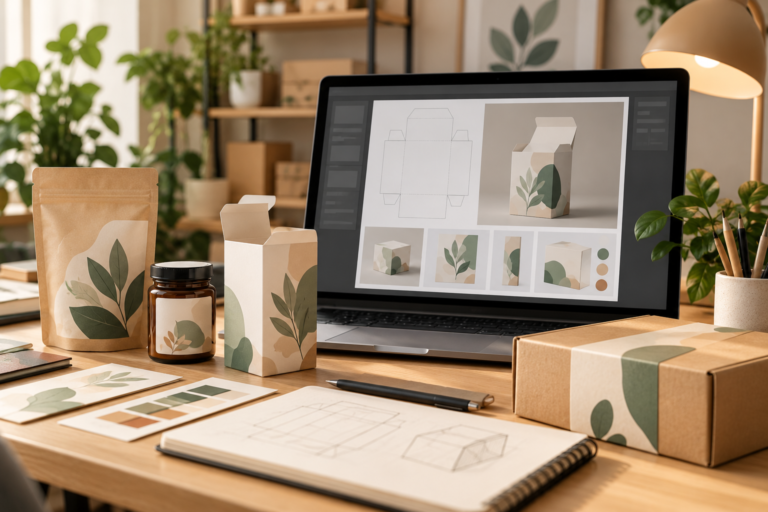
- Kraft and uncoated finishes
This trend connects directly to packaging design trends and premium print products in the U.S. market.
3. Modern Print Design with Controlled Color
Color is used strategically, not decoratively.
What works in 2026:
- One dominant color + neutrals
- Muted palettes over loud CMYK mixes
- Color systems aligned with print profiles
Brands increasingly reference standards from Pantone to avoid inconsistencies.
4. Print Inspiration from Everyday Life
Print inspiration in 2026 is grounded and human.
Common sources:
- Local cafés
- Independent bakeries
- Handmade packaging
- Cultural typography
This shift reflects consumer fatigue with overly polished, artificial design.
5. Sustainable Print Design (Without Greenwashing)
Sustainability is no longer a visual style—it’s a production decision.
Real sustainable print design includes:
- Fewer inks
- Smaller print runs
- Paper-first thinking
- Honest material labeling
Direct clarity:
Sustainable design is about reducing waste—not adding eco buzzwords.
Trends Designers Should Stop Chasing
Not all trends deserve your time.
❌ Overloaded gradients
❌ Ultra-thin typography
❌ Decorative effects that don’t survive print
❌ Trend-driven styles with no practical use
Real-World Application (U.S. Market Examples)
In the U.S. print market, successful designs:
- Scale across packaging, inserts, and wall art
- Work in both premium and budget print runs
- Remain readable under different lighting
This is why modern print design favors clarity over complexity.
My Personal Experience (Busho Designer Insight)
From my own work at Busho Designer, the designs that perform best are not the most complex.
Real experience:
The prints that sell consistently are clean, restrained, and technically accurate—especially when exported correctly and tested physically.
I rely heavily on Adobe Illustrator and Photoshop to test scale, contrast, and print readability before publishing any printable product.
Practical Tips You Can Apply Today
- Design in CMYK early
- Test typography at actual print size
- Avoid more than 3 ink colors unless necessary
- Always preview on uncoated paper simulations
Quick Comparison Table
| Trend Type | Works in Print? | Long-Term Value |
|---|---|---|
| Minimalist Print Design | ✅ Yes | High |
| Decorative Effects | ❌ No | Low |
| Tactile-Focused Design | ✅ Yes | High |
| Trend-Driven Aesthetics | ❌ Risky | Low |
In 2026, successful print design trends focus on clarity, material awareness, and real-world printing—not visual trends designed only for screens.
FAQ – Print Design Trends 2026
1. Are print design trends still important in 2026?
Yes—when they are grounded in production reality, not aesthetics alone.
2. Is minimalist print design still relevant?
Yes, but only with strong typography and intentional layout.
3. What inspires modern print design today?
Everyday life, physical textures, and honest materials.
4. How does sustainability affect print design trends?
It limits excess and rewards thoughtful, efficient design.
5. What trend should designers avoid most?
Over-designed visuals that don’t print accurately.
Looking for practical, real-world ways to apply sustainable design—not theory?
👉 Read next:
6 Eco-Friendly Packaging Solutions You Can Start Using TodayA clear, practical guide to packaging solutions designers and small brands can actually use without greenwashing.
Looking for recommended packaging tools, printers, supplies, and software? Visit our Small Business Packaging Tools page.